Hello and Welcome
Today, I want to talk about the chapter entitled "CLONE STORY" from the book "SIMULACRA AND SIMULATION" authored by Jean Baudrillard.
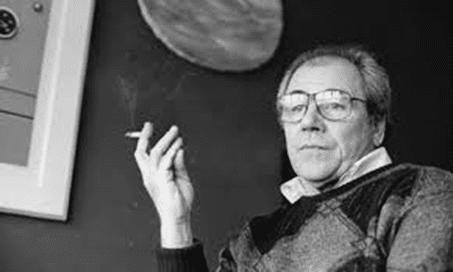
ABOUT THE AUTHOR:
Jean Baudrillard was a French sociologist and philosopher with an interest in
cultural studies. He is best known for his analyses of media, contemporary
culture, and technological communication, as well as his formulation of
concepts such as hyperreality. Baudrillard wrote about diverse subjects,
including consumerism, critique of economy, social history, aesthetics, Western
foreign policy, and popular culture.
WHAT IS THIS CHAPTER ABOUT?
This chapter explores the philosophical implications of cloning. Baudrillard positions cloning as
the materialism of the double and a step beyond traditional notions of
reproduction and identity. He argues that cloning signifies a
shift from sexual procreation, linked to death and alterity, towards a
monocellular utopia focused on replicating the same. He says that cloning
bypasses the traditional act of procreation that involves the intertwining of
genes and differences from both parents. The cloner does not beget, but
“sprouts” from a segment of the original, replacing parental figures with a
matrix of code.
This technological intervention
signifies the end of the body as a unique entity, replacing it with a series of
identical prostheses. Here, he differentiates mechanical and genetic prostheses
in the former are external and modify the body’s image, while the later are
internalised and becomes the body’s original model. The mechanical protheses
are used to repair failing organs or extend the body whereas genetic prostheses
are more abstract and involve intervening in genetic formula, resulting in a
body that cannot be represented.
The text also discusses how this
transition is not simply a technological progression, but also a cancerous
metastasis in which the proliferation of the same erodes the singularity and
meaning of the original. Baudrillard compares cloned individual with a
cancerous metastasis because they represent the unchecked proliferation of the
same cell or formula. Like cancer, cloning involves the renewal of the same,
without consideration for the organic laws of the whole or differential
vicissitudes.
Ultimately, cloning becomes a
symbol of a hyperreal world where simulation precedes the real, and the
original is lost to endless reproduction.
KEY TERMS
Simulacra:
Copies that depict things that either have no
original, or no longer have an original. They are signs of reality that have no
basis in reality itself.
Simulation:
The limitation of the operation of a real-world
process or system over time. In Baudrillard’s work, it is the process by which
models and codes come to replace reality itself.
Double:
An imaginary figure that haunts the subject,
representing their otherness and mortality. Its power lies in its materiality.
Clone:
A genetically identical copy of an organism.
Cloning, for Baudrillard, represents the abolition of alterity and the
imaginary through genetic means.
Alterity:
The state of being otherness of different;
otherness. Baudrillard argues that cloning seeks to abolish alterity in favour
of the same.
Prosthesis:
An artificial device that replaces a missing
body part or function. Baudrillard extends this concept to include genetic codes,
arguing that they are the ultimate prostheses.
Genetic code:
The set of instructions encoded in DNA that
determine the development and functioning of an organism. Baudrillard sees the
genetic code as an abstract matrix that can be used to reproduce identical
beings.
Precession of the Model:
The idea that the model, in this case, the
genetic code, precedes and determines reality, rather than the other way
around. The genetic code becomes a primary reality, and the body simply its
replication.
That is all for today. Follow me for more such short reviews.
Thank you!
Comments
Post a Comment