Hello and welcome
Today, I will continue talking about Peircean semiotics. Today, we will discuss three basic elements in Peircean Semiotics.
As discussed earlier, there are
three components in the Peircean Sign structure which are Representamen,
Interpretant, and Object.
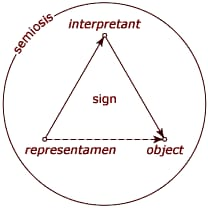
A representamen (or sign)
represents in the fullest sense of "represents". It might be
interpreted as saying something about something. It is not always symbolic,
verbal, or manufactured.
An object (or semiotic object) is
the subject matter of a sign and its interpreter. It can be anything that can
be discussed or thought about, such as an object, event, relationship, quality,
legislation, argument, or even a work of fiction. All of these are special or partial
objects. The object most correctly represents the universe of discourse to
which the partial or special object belongs.
An interpretant (or interpretant
sign) is the sign's more or less clear meaning or effect, a type of form or
concept of the difference that the sign's truth or deception would have. The
interpretant is an interpretation in the sense that it is the result of an
interpretative process or the content at the end of an interpretive
relationship.
That is all for today. Comment which concepts
you want to know in more detail. Stay
tuned.
Comments
Post a Comment